
What Are Kidney Stones?
Kidney stones are hard mineral and salt deposits that form inside the kidneys. They develop when urine becomes concentrated, allowing minerals to crystallize and stick together.
Kidney stones can affect individuals of all ages and are becoming increasingly common due to lifestyle and dietary habits.
Types of Kidney Stones
- Calcium stones (most common)
- Uric acid stones
- Struvite stones
- Cystine stones
Understanding the type of stone helps determine the best treatment plan.
Causes & Risk Factors
Kidney stones may form due to:
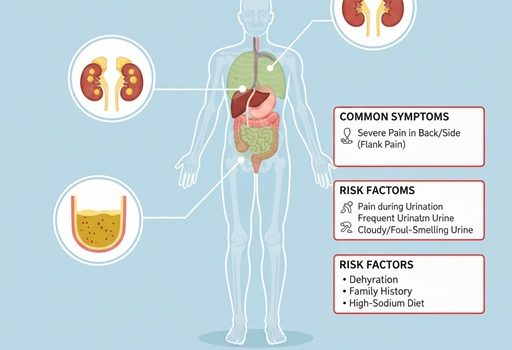
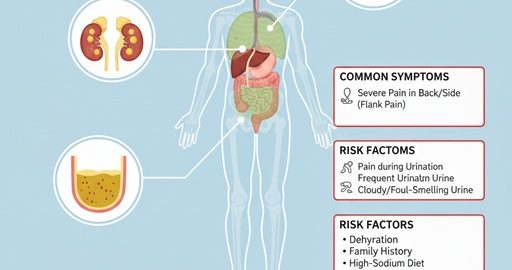
- Dehydration (low water intake)
- High salt diet
- Excess protein consumption
- Obesity
- Recurrent urinary infections
- Family history
- Certain medications
Living in hot climates and not drinking enough fluids increases risk.
Symptoms of Kidney Stones
Symptoms vary depending on size and location. Common signs include:
- Severe pain in the back or side (renal colic)
- Pain radiating to the lower abdomen or groin
- Burning sensation during urination
- Blood in urine
- Frequent urge to urinate
- Nausea and vomiting
Small stones may pass on their own, while larger stones may block urine flow.
Diagnosis
Diagnosis at Ayushman Hospital may include:
- Urine tests
- Blood tests
- Ultrasound
- CT scan
These tests help determine stone size and location.
Treatment Options
1. Conservative Management
Small stones can pass naturally with:
- Increased fluid intake
- Pain medication
- Medical therapy to help stone passage
2. Advanced Treatment Options
- ESWL (Extracorporeal Shock Wave Lithotripsy) – Breaks stones using sound waves.
- URS (Ureteroscopy) – Removal using a thin scope passed through the urinary tract.
- PCNL (Percutaneous Nephrolithotomy) – Minimally invasive surgery for large stones.
Treatment depends on stone size, type, and patient condition.
Prevention Tips
- Drink 2.5–3 liters of water daily
- Reduce salt intake
- Limit excessive protein consumption
- Maintain healthy weight
- Regular medical check-ups
When to Seek Emergency Care?
Immediate attention is required if:
- Pain is unbearable
- Fever with urinary symptoms
- Difficulty passing urine
Prompt treatment prevents kidney damage and infection.