
A hernia is a common medical condition that occurs when an internal organ or tissue pushes through a weak spot in the surrounding muscle or connective tissue. Although hernias can develop in different areas of the body, they most frequently occur in the abdominal region. At Ayushman Hospital, Muzaffarpur, our multidisciplinary surgical team offers advanced diagnosis and personalised hernia care for rapid recovery and long-term health.
What Is a Hernia?
A hernia develops when pressure within the abdominal cavity forces tissue or part of an organ (commonly the intestine) through a weakened area in the muscle wall. Over time, this bulge can grow larger, become painful, and in severe cases, lead to life-threatening complications.
Common Types of Hernia
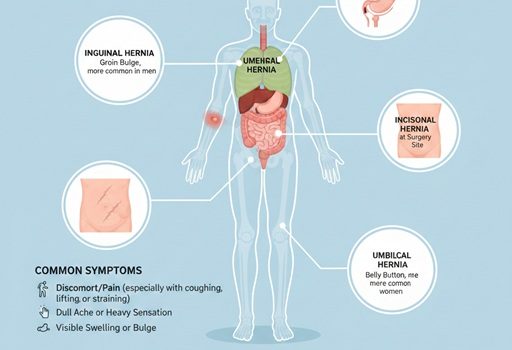
- Inguinal Hernia – Occurs in the groin region; more common in men.
- Femoral Hernia – Appears near the thigh; more common in women.
- Umbilical Hernia – Develops around the belly button.
- Incisional Hernia – Occurs at the site of a previous surgical incision.
- Hiatal Hernia – Part of the stomach pushes up into the chest through the diaphragm.
Causes & Risk Factors
Hernias can be caused by a combination of muscle weakness and strain. Risk factors include:
- Heavy lifting
- Chronic coughing
- Straining during bowel movements
- Obesity
- Pregnancy
- Genetic predisposition
- Previous abdominal surgery
At Ayushman Hospital, early identification of risk factors helps reduce progression and improve treatment outcomes.
Signs & Symptoms
The most common symptoms of hernia include:
- A visible bulge or lump in the abdomen or groin
- Discomfort or pain, especially when bending, lifting, or coughing
- Weakness or pressure in the affected area
- In some cases, symptoms may be absent and the hernia is discovered during a clinical exam
Seek medical help immediately if you experience severe pain, nausea, vomiting, or inability to pass gas or stool — symptoms suggestive of strangulation, a surgical emergency.
Diagnosis
Diagnosis begins with a thorough clinical examination. Depending on the case, the surgeon may recommend imaging studies such as:
- Ultrasound
- CT Scan
- MRI
These tests help determine the size, type, and exact location of the hernia and inform the best treatment approach.
Treatment Options
Conservative Management
Small, painless hernias may be monitored closely by the surgical team, with lifestyle modifications recommended to reduce strain.
Surgical Repair
Surgery is the definitive treatment for hernia and can be performed by:
- Open Hernia Repair (Herniorrhaphy)
- Laparoscopic Hernia Repair (Minimally Invasive Surgery)
At Ayushman Hospital, we use state-of-the-art surgical techniques tailored to each patient’s condition. Laparoscopic repair offers the benefits of smaller incisions, less postoperative pain, shorter hospital stay, and faster recovery.
Recovery & Post-Operative Care
After hernia surgery, patients are guided through a structured recovery plan that includes:
- Pain management
- Wound care instructions
- Activity and lifting restrictions
- Scheduled follow-up visits
Most patients return to normal daily activities within a few weeks, depending on the type and complexity of the hernia repair.
Why Choose Ayushman Hospital, Muzaffarpur?
At Ayushman Hospital, hernia care is delivered by experienced surgeons supported by modern surgical infrastructure and compassionate nursing care. Our focus is on:
- Accurate diagnosis
- Evidence-based treatment planning
- Minimal invasive surgical options
- Personalized recovery guidance
We ensure that every patient receives safe, effective, and patient-centred care from diagnosis through full recovery.
When to Seek Medical Help
Visit our surgical department if you notice:
- A persistent or growing lump
- Pain or discomfort with exertion
- Signs of hernia complications (severe pain, vomiting, inability to pass stools)
Early evaluation can prevent complications and improve surgical outcomes.